
Copyright: © 2026 by the authors. Licensee: Pirogov University.
This article is an open access article distributed under the terms and conditions of the Creative Commons Attribution license (CC BY).
This article is an open access article distributed under the terms and conditions of the Creative Commons Attribution license (CC BY).
ORIGINAL RESEARCH
Testing a speech rehabilitation brain-computer interface for use in clinical settings
About paper
The study was carried out within the framework of the HSE Fundamental Research Program
The authors declare no obvious or potential conflicts of interest related to the publication of this article. The study was approved by the HSE University Committee for Internal Surveys and Ethical Review of Empirical Research Projects. Participants signed informed consent forms.
Received: 2024-09-30
Accepted: 2025-12-22
Published online: 2026-02-10
|
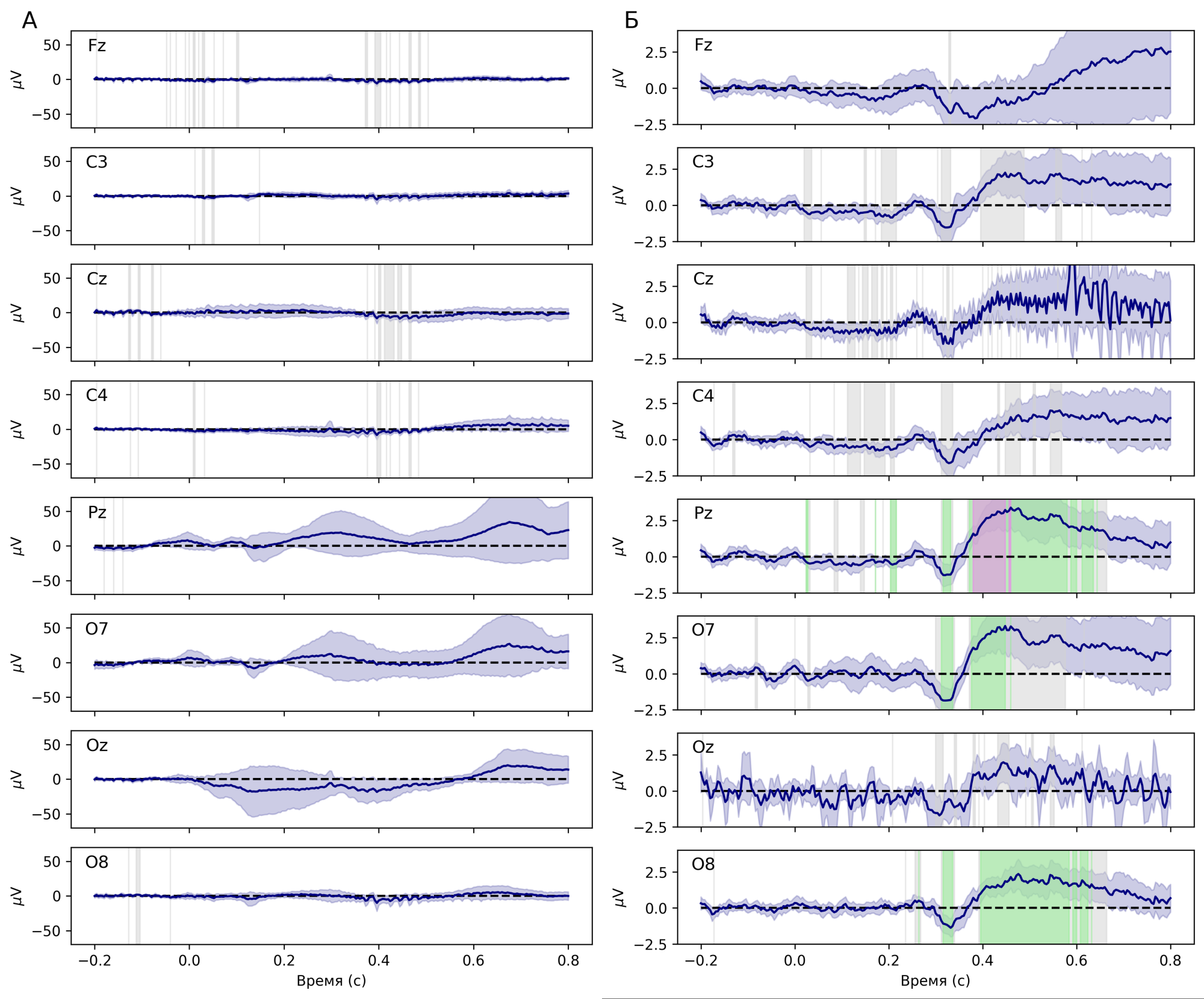
Figure 1
The difference between the evoked potentials for the target stimulus and the distractor, averaged across the group and across sessions without gel (A) and with gel (B). From here on, the blue lines represent the 95% confidence interval for the mean; the gray, green, and purple bars represent the difference in signal from 0 at p<0.05 (before FDR correction), p<0.05 (after FDR), and p<0.01 (after FDR)
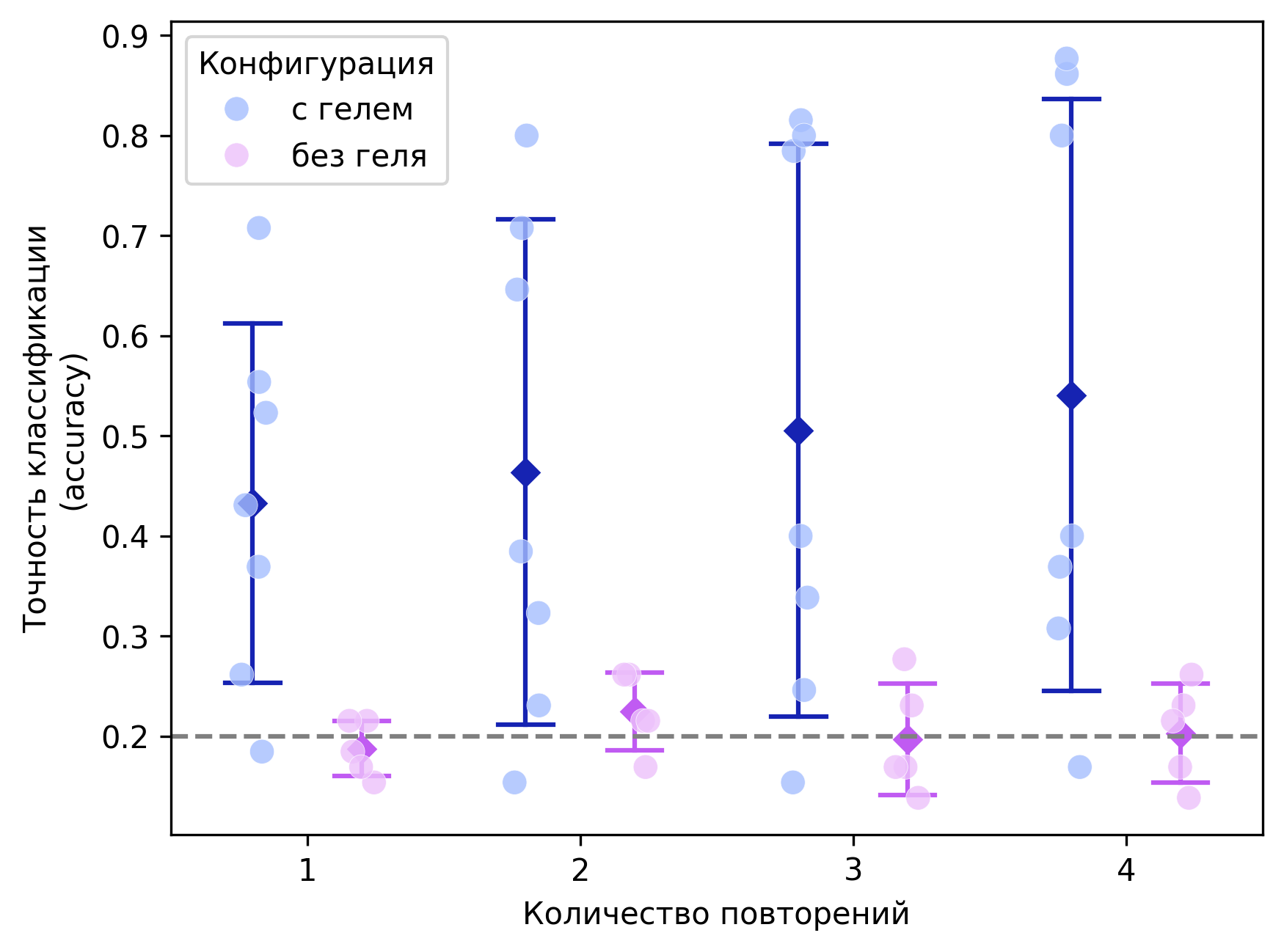
Figure 2
Data classification quality for different configurations depending on the number of stimulus repetitions. The graph shows the mean and standard deviation of classification quality
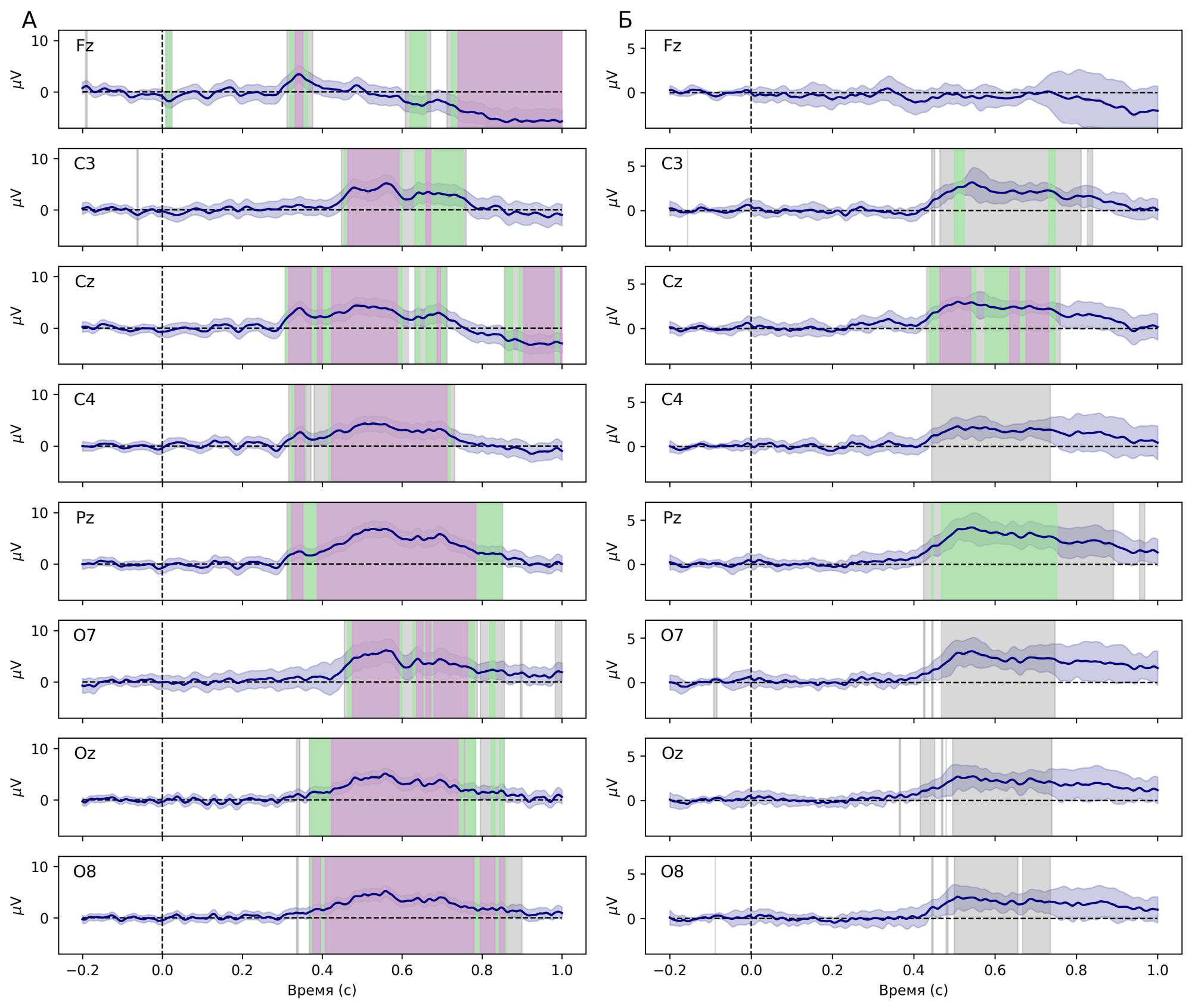
Figure 3
Difference between evoked potentials for the target stimulus and the distractor, averaged for one participant (A) and for the group (B)
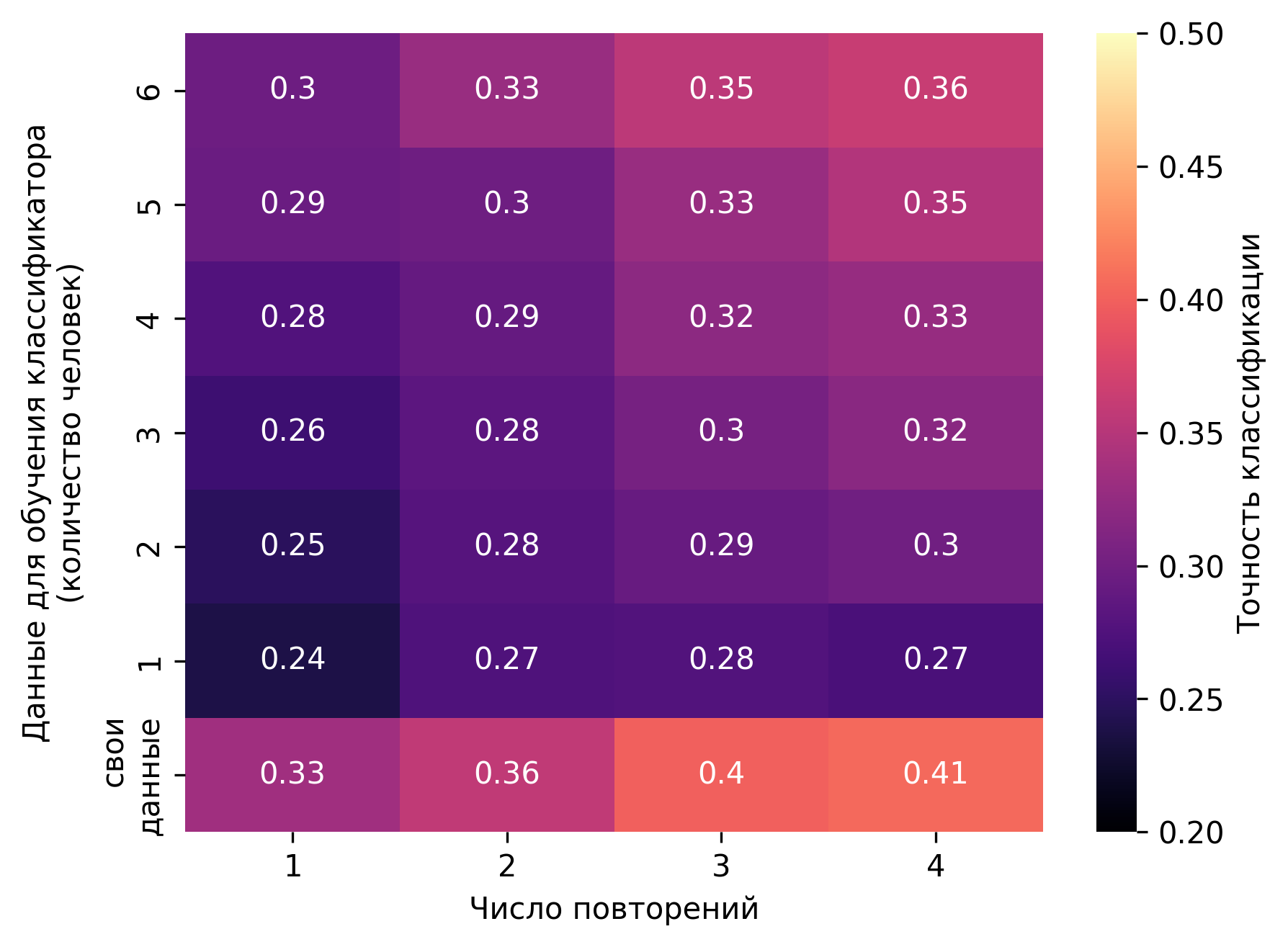
Figure 4
Plot of the dependence of classification accuracy on the amount of data used for pre-training and the number of stimulus repetitions during one trial